How to Balance a Palm Beach and Hamptons Condo Across Seasons
June 11, 2026
June 11, 2026
If your year naturally splits between South Florida sun and East End summers, choosing how to live well in both places is less about duplication and more about balance. You want each home to feel easy, beautiful, and ready when the season arrives, without overbuilding one residence or under-planning the other. The good news is that Palm Beach and the Hamptons follow two very different calendars, which gives you a useful framework for how to buy, furnish, and prioritize each condo. Let’s dive in.
Palm Beach County operates on a winter-leaning rhythm, even though it is promoted as a year-round destination. According to the county tourism master plan, 30% of 2023 visitation happened in Q1 and 24% in Q4, with the New York metro area as the largest origin market. That pattern supports what many seasonal owners already know by experience: Palm Beach often works best as your winter base.
The Hamptons moves on a much tighter summer schedule. East Hampton notes that most town beaches open for swimming on Memorial Day weekend, are fully open daily by mid-June, and remain that way through Labor Day. Southampton also requires beach parking permits from May 15 through September 15, which reinforces how concentrated the East End season really is.
Taken together, these two markets complement each other naturally. Palm Beach offers a longer, more stable period of use during Florida’s dry season from November through March, while the Hamptons delivers a compressed but highly active summer chapter. If you own in both places, your strongest strategy is usually to treat them as different tools for different parts of the year.
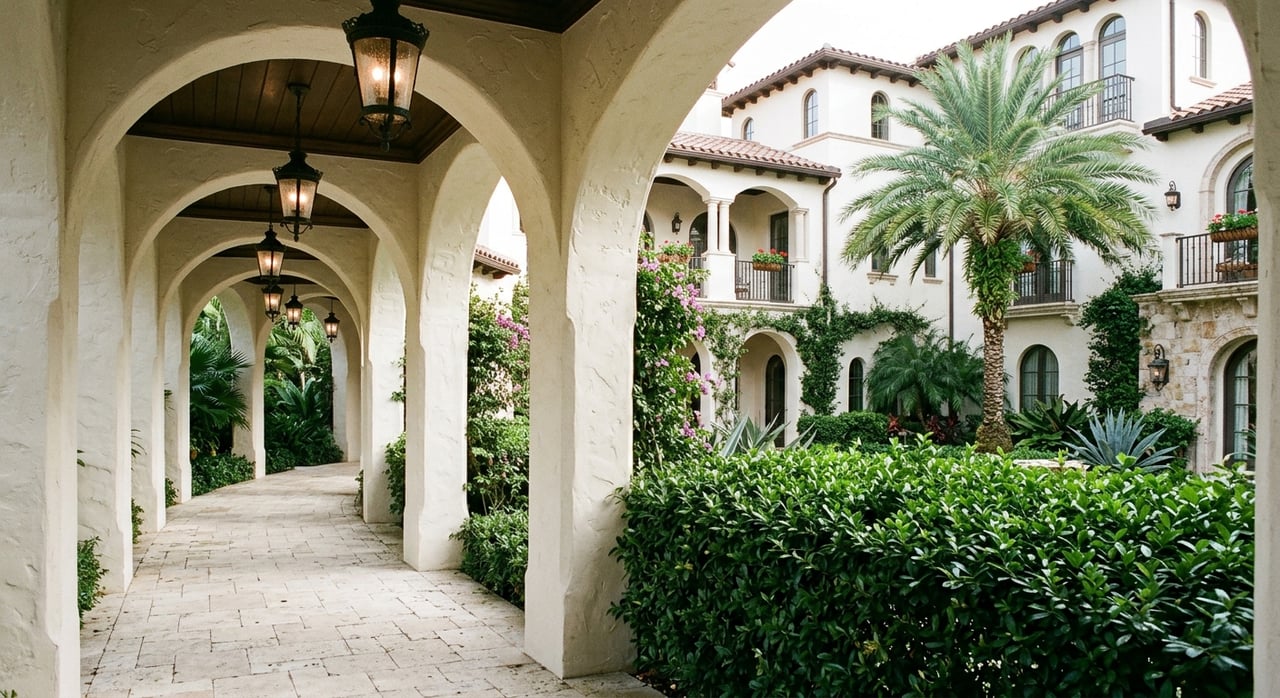
For many dual-market owners, the Palm Beach condo should function as the primary seasonal residence. The local data supports that approach because visitor demand is strongest in Q1 and Q4, and the area is closely tied to Northeast travel patterns. Palm Beach also has a meaningful second-home and alternative-lodging presence, which means seasonal ownership is already a normal part of the local housing pattern.
That matters because your winter anchor should do more than simply look polished. It should support longer stays, day-to-day comfort, and a consistent sense of ease. In practice, that often means giving Palm Beach the deeper investment in the spaces and systems you use most.
If Palm Beach is where you stay longer, the condo should feel settled and highly functional. The most valuable upgrades often include:
This is where design and practicality should meet. A well-planned Palm Beach condo should feel turnkey on arrival, but it should also hold up comfortably over weeks or months of use.
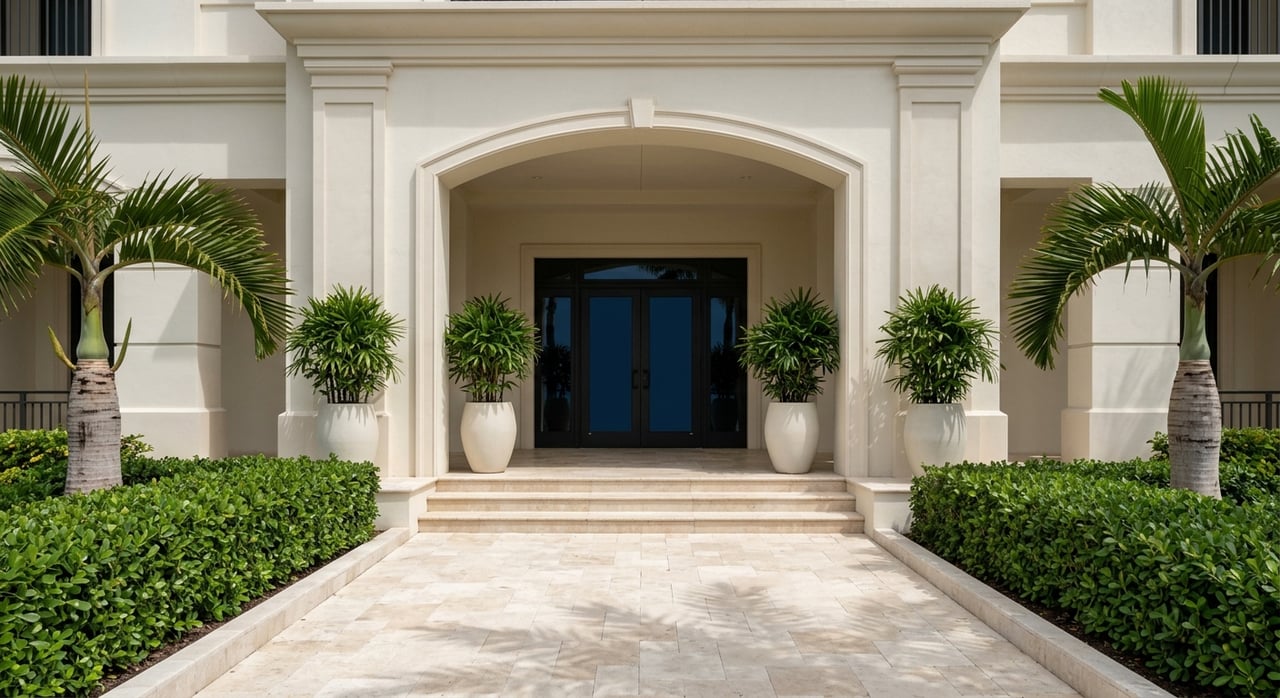
In coastal South Florida, resilience is not an extra. It is part of responsible ownership. FEMA coastal guidance highlights shutters and impact-resistant windows as common protective measures in hurricane-prone areas, so storm hardening should be considered a baseline feature for a Palm Beach condo rather than a luxury add-on.
That mindset also supports long-term ease. A residence that is simpler to secure before weather events and easier to reopen afterward tends to create less friction across the season.
The Hamptons asks something different of a condo or seasonal residence. Because the prime season is shorter and more compressed, the home usually performs best when it is easy to open, enjoy, and close. You are often optimizing for efficient weekends, guests, and quick summer transitions rather than a long, steady stretch of winter living.
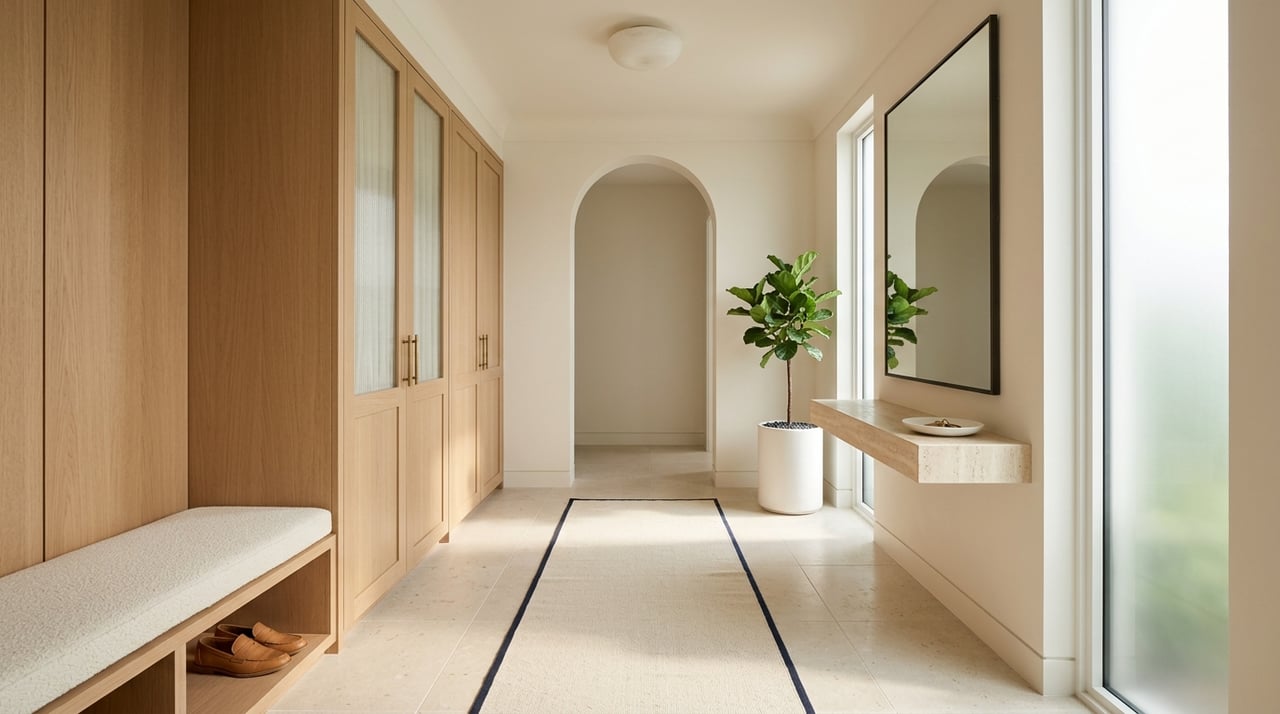
This is why many owners spend differently on the East End side. Instead of deeply personal customization, the smarter investment often goes toward durability, flexibility, and low-maintenance design.
Given the Hamptons' tightly defined summer season and permit calendar, a practical setup can make a real difference. Useful priorities often include:
These are planning inferences based on how the summer season operates, not rigid rules. Still, they align well with the way many owners actually use a Hamptons property.
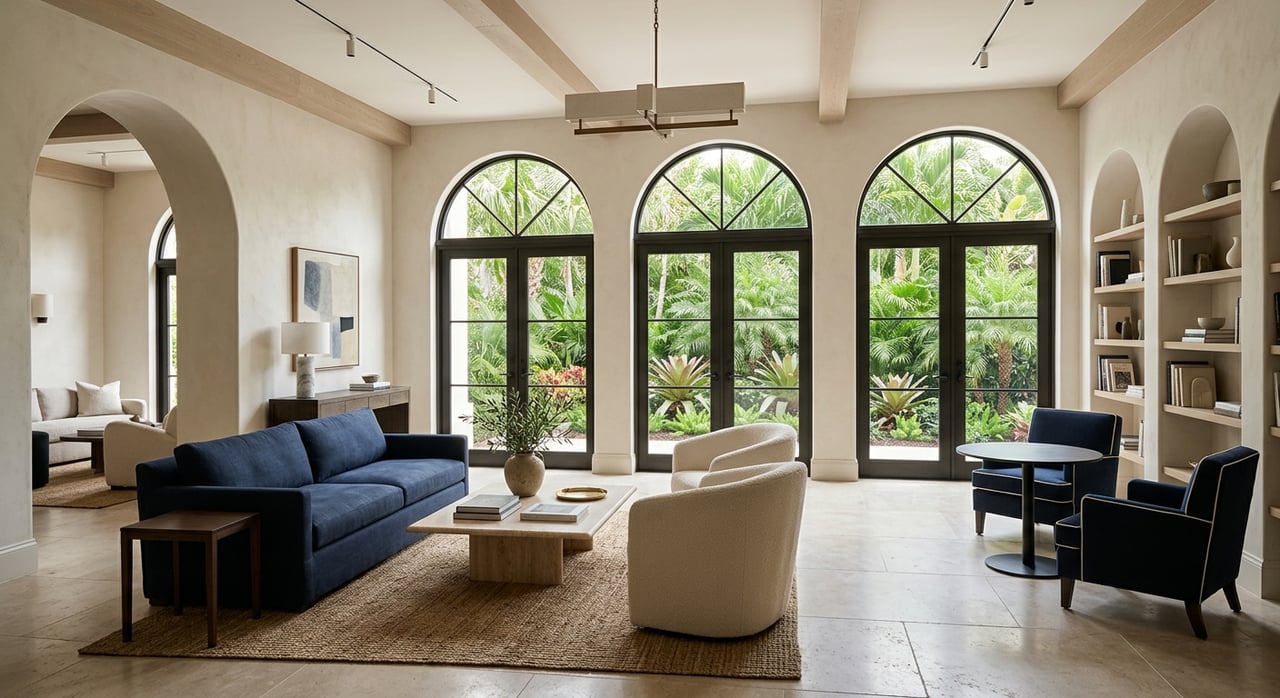
A common mistake is trying to make both homes equally elaborate. In reality, the two residences do not need the same level of personalization to feel luxurious. Your Palm Beach condo may justify more refined finish decisions and longer-stay comforts, while your Hamptons home may benefit more from clean, durable materials that still present beautifully.
That distinction can protect both your budget and your lifestyle. Luxury is not always about spending more everywhere. Often, it is about spending with intention.
One reason Palm Beach works so well as the winter anchor is access. Palm Beach International Airport lists nonstop service to New York-JFK, LaGuardia, Newark, Westchester, and Islip, among other Northeast gateways, and reports more than 200 daily nonstop arrivals and departures. The airport is also about 3.5 miles west of Palm Beach, which adds real convenience for seasonal owners.
That kind of connectivity makes the Florida side unusually efficient for a two-home lifestyle. Whether you are heading north for summer or returning south as the season shifts, the Palm Beach leg is often the smoother half of the journey.
On the New York side, the Hamptons is reachable on the Montauk Branch to stops including Westhampton, Hampton Bays, Southampton, Bridgehampton, East Hampton, Amagansett, and Montauk. The South Fork Commuter Connection adds weekday train-and-shuttle service between Speonk and Montauk. However, the MTA notes that certain Friday trains do not run from Memorial Day weekend through Labor Day.
That makes Hamptons access possible, but more schedule-sensitive in peak season. Add beach permit windows and summer driving restrictions in East Hampton, and it becomes clear why the New York side usually requires more advance planning.
A successful Palm Beach and Hamptons ownership strategy is not just about décor. It is about reducing friction across two very different seasonal systems. When your homes are set up to match local patterns, the entire year starts to feel more fluid.
In Palm Beach, that means preparing for longer occupancy during the winter and shoulder seasons. In the Hamptons, it means respecting a faster, more regulated summer cadence.
Before you invest in upgrades or furnishings, it helps to define each condo’s role clearly:
For many owners, the answers are fairly consistent. Palm Beach tends to serve as the deeper-use residence, while the Hamptons is optimized for quick, high-season enjoyment.
Any ocean-adjacent condo should be evaluated with resilience in mind. FEMA risk guidance underscores that coastal flooding and storm exposure remain important considerations in coastal markets. For a dual-residence owner, that makes low-friction ownership especially valuable.
The best-positioned properties are often the ones that are easy to secure, easy to maintain, and easy to recover after weather events or seasonal closures. Across both Palm Beach and the Hamptons, turnkey living is not just an aesthetic preference. It is a practical asset.
In luxury condo living, turnkey is often used to describe a finished interior. But for seasonal ownership, the term should also include operational ease. That means a residence that feels ready on day one, performs well through changing conditions, and supports your routine without demanding constant oversight.
This is where thoughtful merchandising, building stewardship, and finish selection matter. A condo that presents beautifully and functions smoothly across seasons usually holds its appeal far better than one that looks impressive but creates avoidable work.
Balancing Palm Beach and Hamptons condo living across seasons is ultimately an exercise in editing. You are not trying to create two identical homes. You are creating a pair of residences that support two distinct chapters of the year, each with its own pace, climate, and logistical demands.
That is why a curated strategy matters so much. The right condo choices, building features, and design investments can help each home do its job better, whether that means polished winter comfort in Palm Beach or efficient summer ease in the Hamptons.
If you are thinking about buying, selling, or refining a seasonal condo strategy between these two markets, working with an advisor who understands design, building quality, and cross-market living can make the process far more precise. To start a private conversation, connect with Sharon Sweet.
Stay up to date on the latest real estate trends.
With unmatched creativity, negotiation skills, and dedication, Sharon is ready to guide you through every step of your real estate journey.
Sharon Sweet
Address 340 Royal Poinciana Way Ste M314 Palm Beach FL 33480