What Changes on Palm Beach Island Between the First Nest and the Last Hatch
August 6, 2026
August 6, 2026
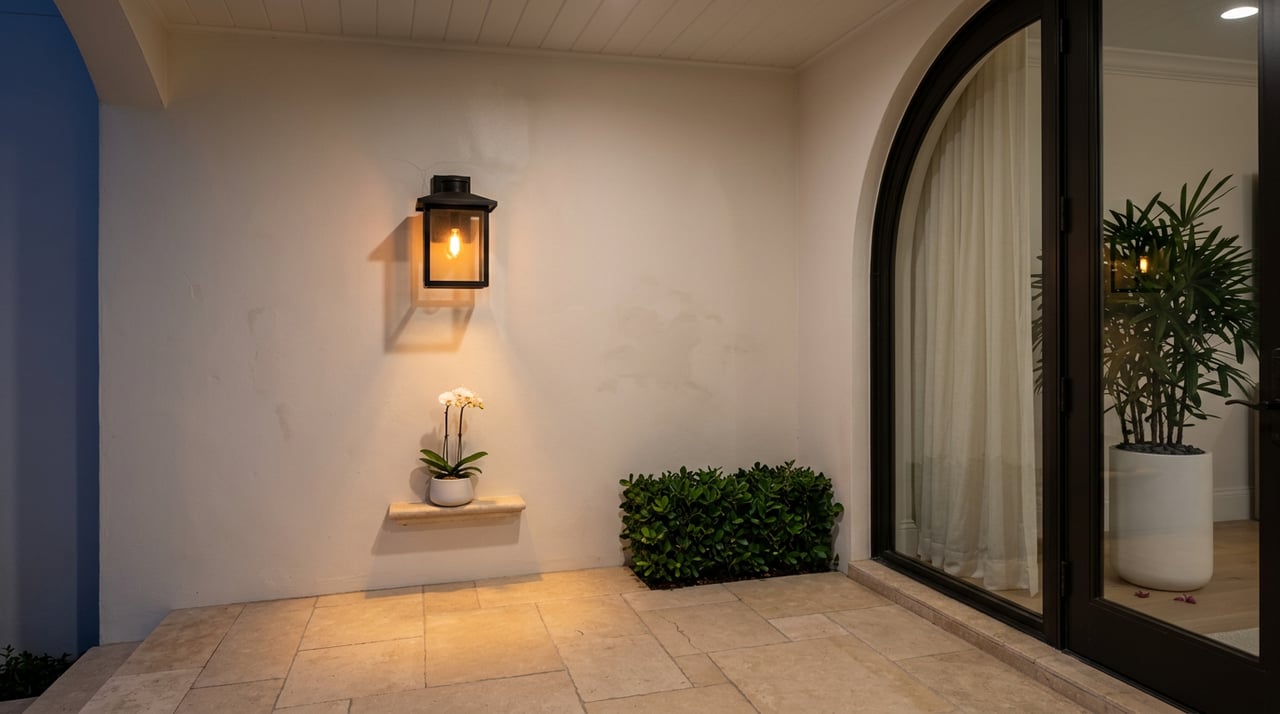
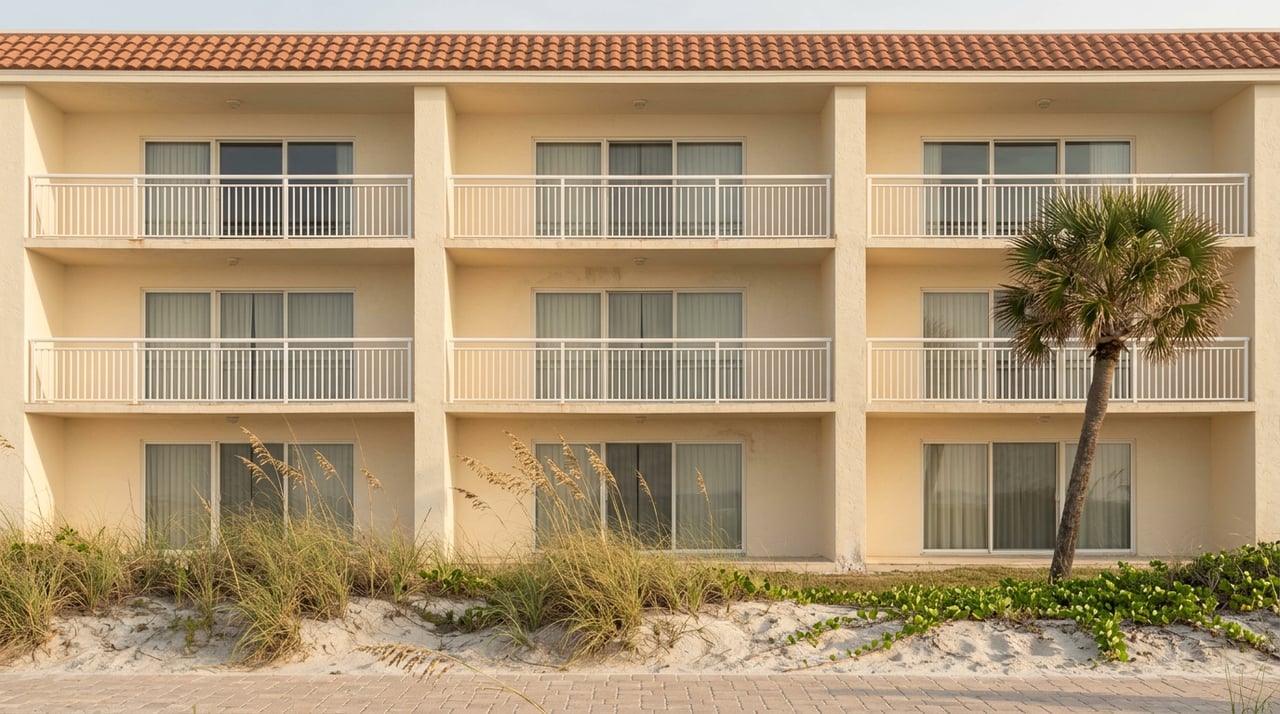
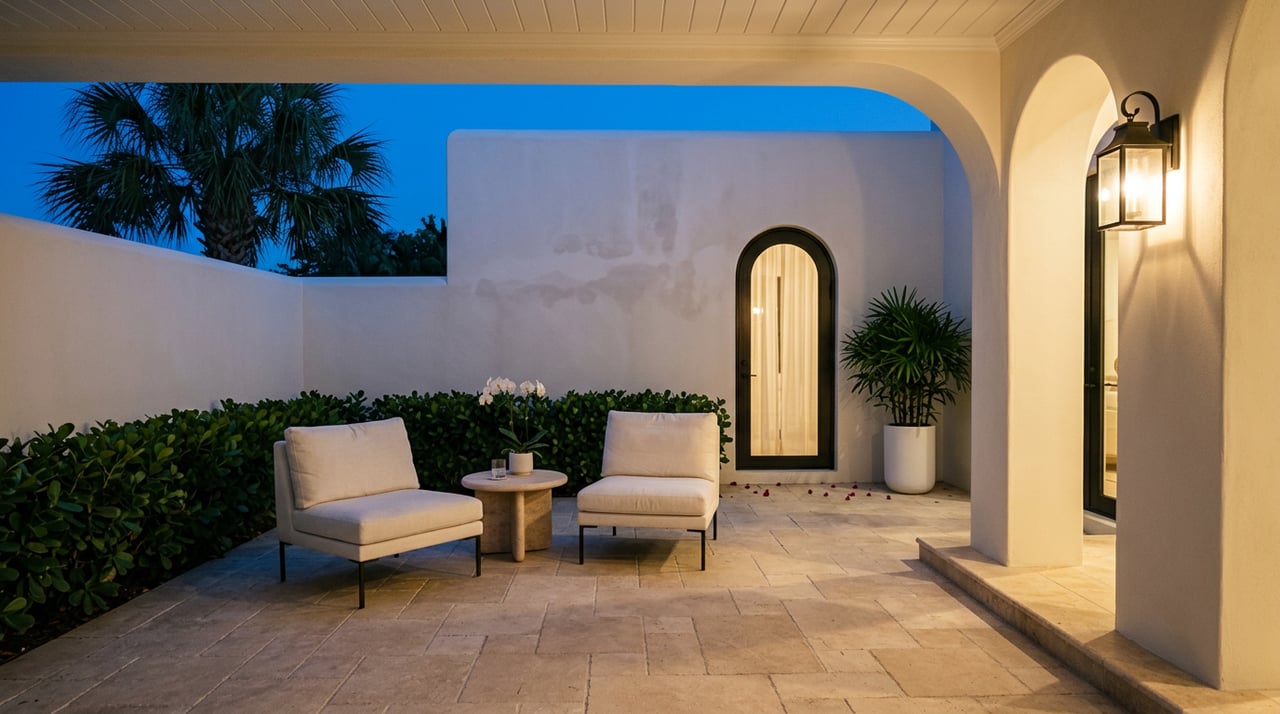
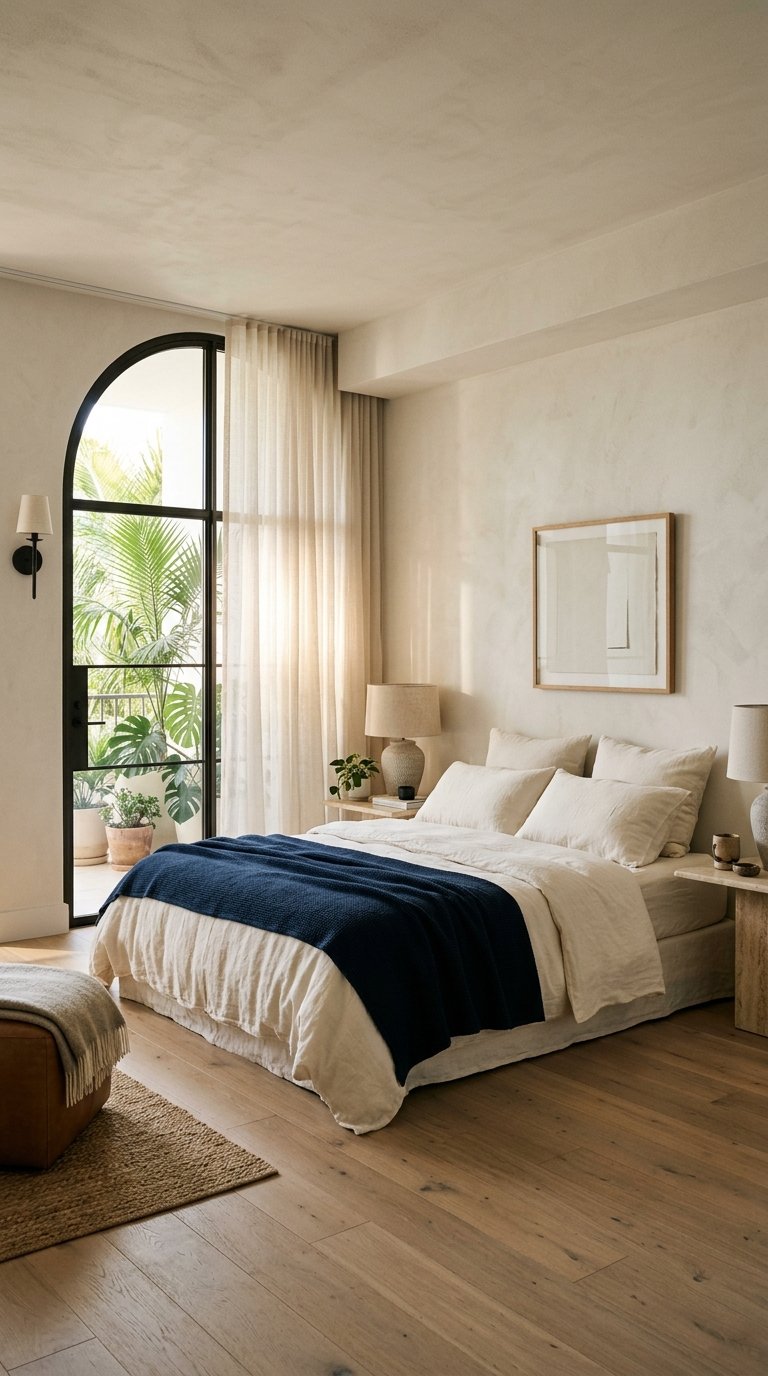
By late July the beach in front of the oceanfront buildings looks the same as it did in May. The change is above the sand. Balcony sconces have been dimmed or redirected. Landscape uplights that graze a hedge in season are switched off after dusk. Sheer drapery hangs closed on the seaward side of primary bedrooms that would otherwise glow. If you live here through the summer, you already recognize the pattern. If you have just closed on a condo in one of the beachfront buildings, the pattern is a rule with a section number, and August is when it matters most.
The thesis of this piece is straightforward. Palm Beach Island's summer is not a lull. It is a season structured, by ordinance, around sea-turtle nesting, and the same rule that quiets the shoreline at night also shapes where residents walk, when they let a dog off leash, and which evenings on the Lake Trail feel like the island belongs to the people who actually live here.
The Town of Palm Beach requires all oceanfront property owners to ensure that artificial lights are not visible from the beach between March 1 and October 31. The specific citation is Section 26-823 of the Town code, titled Shielding of Light. It applies to buildings, homes, and landscaping. The window is not a suggestion. Palm Beach County's Environmental Resources Management office has regulated beachfront lighting since 1987, and inspections happen inside the county's Sea Turtle Protection Zone every summer.
Three species nest on this stretch of coast: loggerhead, leatherback, and green. Loggerheads dominate. Nesting begins in the spring, and the first eggs laid in early May are already hatching by the last week of July. The peak, on the island and on the county's index beaches to the north, runs from late July through October. That is the window a resident feels in daily life.
The Town's seasonal notice reduces the compliance question to three tasks. Turn off lights that illuminate the beach or ocean. Shield or redirect fixtures so light is not visible from the shoreline. Make sure outdoor lighting does not disturb nesting turtles or hatchlings during nesting season. Interior light counts. If a lit primary bedroom is visible from the sand, the owner is expected to draw window treatments, tint the glass, or install film. Pool deck lights and underwater pool lights are typically off after sunset for the duration.
Florida's state guidance, referenced by most local codes, compresses the technical answer to a phrase: keep it long, keep it low, keep it shielded. Long refers to wavelength. Amber, orange, and red lamps at roughly 560 nanometers or above are the accepted range. Low refers to mounting height. Shielded means the fixture is aimed and cut so that a person standing on the beach cannot see the bulb or its reflected glow.
For a design-forward condo, the practical implication is not a compromise on look. Fixture families in aged brass and blackened bronze are already available with turtle-safe lamping. The board-level implication is different. A well-run oceanfront building has already made the switch at the common-area level, retrofitted pool and deck lights, and issued a March-first reminder to owners about interior visibility. Buildings that have not are usually the ones a careful buyer notices.
The Lake Trail is where the season actually gets walked. The paved path runs 5.5 miles along the western edge of the island, from the marinas near Worth Avenue north to just past the Sailfish Club, weaving past the Society of the Four Arts, the Flagler Museum, the Royal Poinciana Plaza, and the yachts at Rybovich. In August the light is the constraint. The middle of the day is impassable, and the trail belongs to residents in two clean shifts: dawn to roughly nine, and the last hour before sundown into blue hour.
The morning shift is the one that intersects with the ordinance in an unexpected way. Off the trail and onto the sand between Sunset Avenue and Wells Road, dogs may be off leash from dawn until 9:00 a.m., provided they remain under their owner's control; after 9:00 a.m. dogs must be on a leash. Everywhere else on the island, off-leash is by property-owner consent only. In August, that narrow pre-nine window is also when the previous night's tracks are most legible in the sand, which is why the residents you see there are the same ones every morning.
| Window | Where residents are | What is happening on the beach |
|---|---|---|
| Dawn to 9:00 a.m. | Sunset-to-Wells beach access, north-end Lake Trail | Overnight nest tracks visible; off-leash dogs permitted |
| Late morning | Publix on Sunset, Sprinkles, Pizza Al Fresco | Turtle team completing morning nest survey |
| Late afternoon | Palm Beach Bicycle Trail Shop rentals, Royal Poinciana Plaza | Shade returns to the middle sections of the trail |
| Blue hour to dark | Loggia, terrace, interior with drapery closed seaward | Ordinance in effect; hatch events beginning after full dark |
The far north end of the trail deserves its own note. A nesting colony of least terns is currently active on the north end of the island. These birds nest directly on the sand rather than in a dune, which is why the fenced-off patches near Sea Isles Estates Pier Park expand every summer. Walking past them at dawn is fine. Cutting through them is not.
Watching a nest hatch on your own stretch of beach is a matter of luck, timing, and restraint. Watching one on a permitted walk is the other option, and the closest programs are north of the island. The Loggerhead Marinelife Center in Juno Beach (561-627-8280) runs turtle walks and hatchling releases through the summer. John D. MacArthur Beach State Park in North Palm Beach (561-624-6950) offers evening walks that meet at a pavilion for a ranger talk before a scout heads to the beach looking for a nesting loggerhead. In recent seasons about half of those programs saw a nesting turtle. Gumbo Limbo Nature Center in Boca Raton (561-544-8605) runs the county's most sought-after walks, with a success rate the center itself puts between 50 and 75 percent, and a strict policy that no flashlights or flash photography are permitted on the sand.
The residents who care about this are usually the same ones who booked in May. Registration for most of these programs opens on May 1 and fills within days. If you are already on the island and did not book, the more realistic August plan is a dawn walk on your own beach with a sea-turtle-safe headlamp packed but off, and the phone in your pocket dark.
A hatch that runs the wrong way is the ordinance made visible. When lights on the west or landward side are brighter than the reflection of the sky on the water, hatchlings orient inland instead of seaward. The rescue protocol is short. Keep your distance. Do not touch, do not lift, do not shine a light. Call the Florida Fish and Wildlife Conservation Commission Wildlife Alert Hotline at 1-888-404-FWCC (3922), or dial #FWC from a mobile phone. The same number handles harassment, injured adults, and any nest disturbance.
The town's Code Enforcement office is the second call if the disorientation traces back to a specific building. The point is not enforcement for its own sake. The point is that a single unshielded fixture on the twelfth floor can reset the geometry of a nest that took sixty days to incubate. Buildings with active boards fix this the same week.
November through May is what the calendar rewards. August through October is what the island rewards. The Lake Trail is emptier. The dining rooms that reopen in late August have their best seats available to anyone who lives here. And the ordinance, for anyone who lives on the ocean side, is the reason the beach at night still feels like the beach: dark enough to see the stars, dark enough for a hatchling to find the water on its own, dark enough that a resident's evening on the terrace is measured in candlelight and the warm glow bleeding through drawn linen.
If your condo is one of the buildings that carries this rhythm well, your summer here is quiet in a way that most of Florida no longer is. If your building is one of the ones still catching up, that is a board conversation worth starting before the March-first reminder arrives again.
To review your building's exterior lighting plan, coordinate a turtle-season audit with your board, or discuss how a Palm Beach oceanfront condo lives through the shoulder months before you buy or sell, Sharon Sweet invites you to schedule a private consultation.
Stay up to date on the latest real estate trends.
With unmatched creativity, negotiation skills, and dedication, Sharon is ready to guide you through every step of your real estate journey.
Sharon Sweet
Address 340 Royal Poinciana Way Ste M314 Palm Beach FL 33480