Why Palm Beach's Condominium Row Is Coming Down, Not Going Up for Repair
August 20, 2026
August 20, 2026
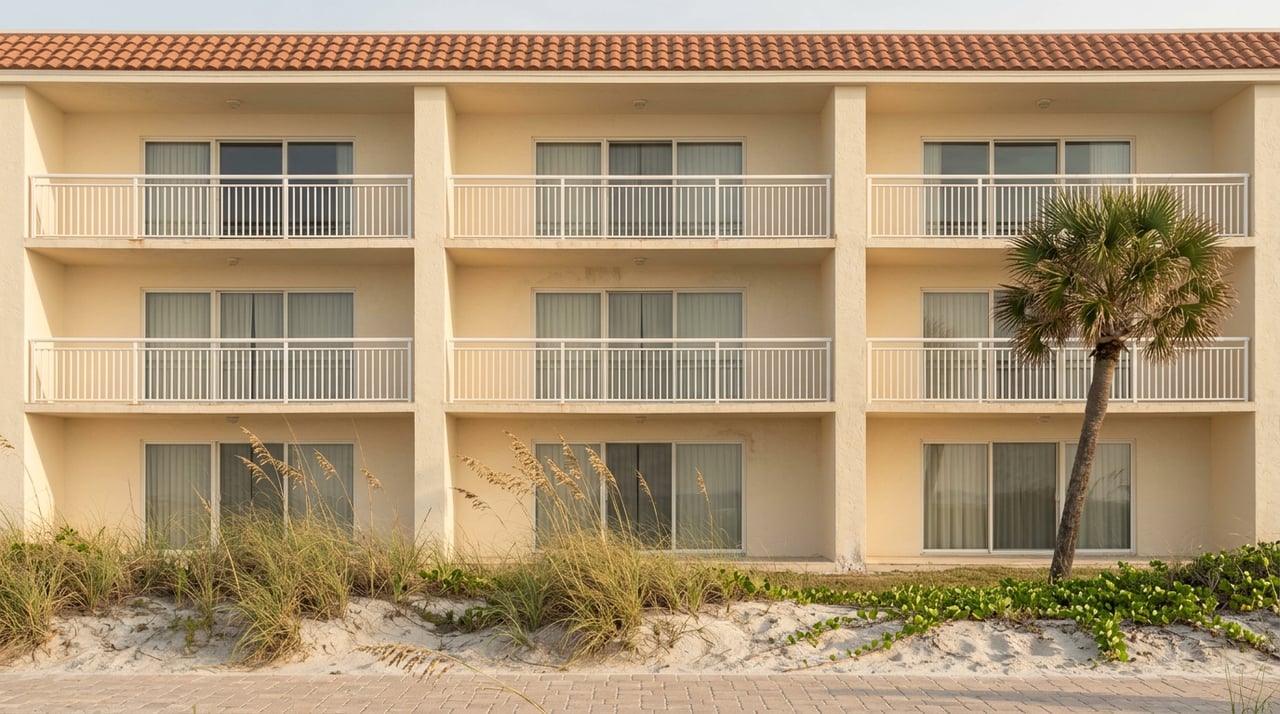
On July 10, demolition crews were on site at 2720 and 2730 South Ocean Boulevard, working through what was left of the Ambassador Hotel & Residences and the adjacent Edgewater building. For a stretch of Palm Beach that locals still call Condominium Row, that alone was worth stopping for. This corridor, south of the bend in South Ocean Boulevard known as Sloan's Curve, has been built out for decades. New ground-up condominium construction here has been the exception, not the rule. Now two projects are underway within the same few blocks, and neither one is adding units. Both are subtracting them, sharply, while raising prices per residence to levels the island has not seen before.
If you are weighing an older oceanfront condominium against a newer one, or trying to understand why a board two buildings down just approved a reserve increase while another board a few doors north sold the land out from under itself, the story on Condominium Row is the clearest version of the mechanism at work across the island's older condo stock.
The site at 2720 and 2730 South Ocean Boulevard will become OLIN Palm Beach, three midrise buildings replacing the 135 units that stood there before with 41. Pricing has not been finalized unit by unit, but the developer's own inquiry form sorts interest into three tiers: up to $20 million, up to $30 million, and over $40 million. The project cleared its final architectural review on June 24, though not without pushback from the Architectural Commission over how the rooftop mechanical equipment would be screened from view. Getting there also took real zoning relief. Town records cite 21 variance requests for the site, alongside what one account of the approval described as unusually supportive public comment from nearby condominium leadership, a sign that the town and its residents may be more open to this kind of redevelopment than they have been in the past.
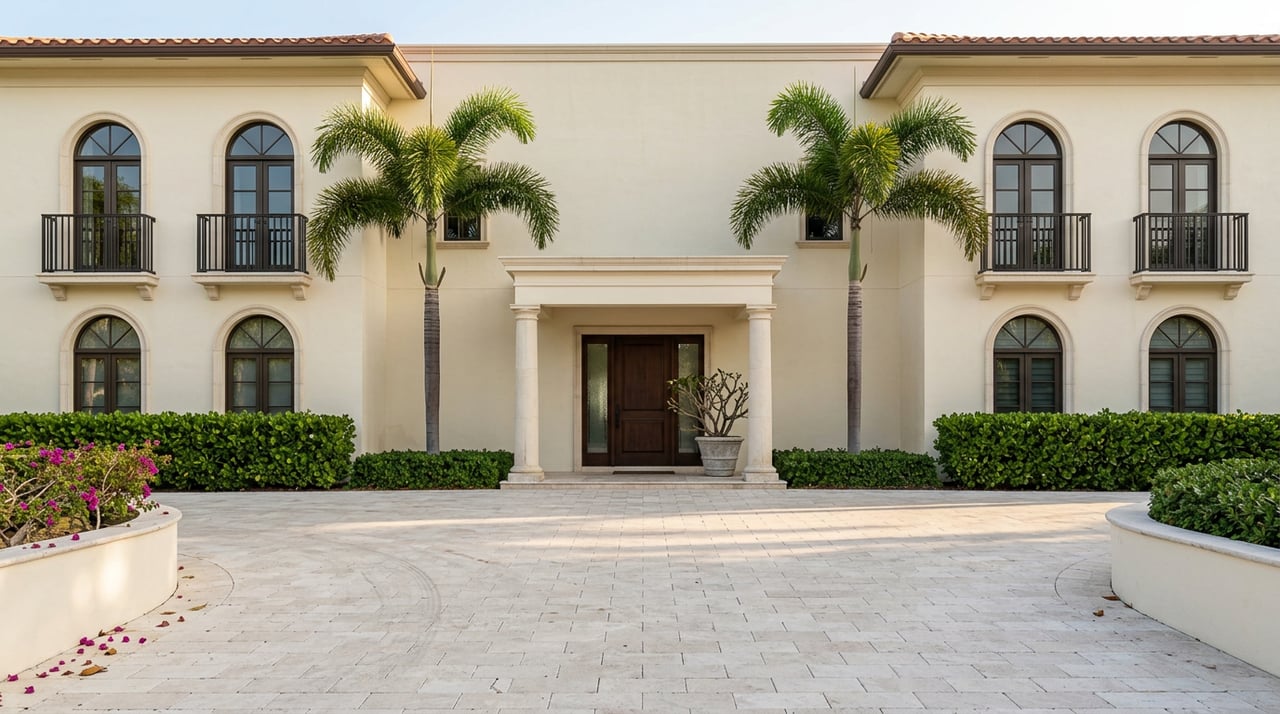
A few blocks south, at 3031 South Ocean Boulevard, the Palm Beach Town Council unanimously approved a very different kind of replacement. The former Palm Beach Resort & Beach Club, a 29-unit property on a man-made peninsula in the Intracoastal Waterway that had operated as timeshares, will become a 12-unit Italian villa-style development designed by Fairfax, Sammons and Partners and built by Copperline Partners under developer Richard Schlesinger, who also holds a majority stake in The Brazilian Court.
Council President Ted Cooney's comments at the meeting captured the town's posture toward the project:
"This is such an architectural marvel, and such an improvement and a model for redevelopment. It's true to the historic character of Palm Beach."
Council Pro-Tem Lew Crampton, who lives in the area and speaks often for South End residents, described the project as a glimpse into the future of a stretch of the island long defined by large-scale condominium buildings.
Two projects, two developers, two very different architectural languages, and the same underlying trade in both cases: fewer, larger, far more expensive residences replacing what came before.
None of this happened because Palm Beach suddenly decided it wanted smaller buildings. It happened because the reserve math inside older associations changed in a way that made the true cost of staying visible for the first time.
For years, Florida condominium boards could vote to waive or underfund reserves for major structural components. A board looking at an aging roof or a garage slab nearing the end of its life could simply choose not to raise dues that year and defer the decision. That option closed for good starting with budgets adopted on or after January 1, 2025, and full funding became mandatory with the 2026 budget cycle now underway. Every association responsible for a building three stories or taller now has to put a real number on paper for roof, structure, waterproofing, electrical, plumbing, and fire protection, and fund it, not vote around it.
For a large, well-capitalized building with hundreds of owners, that number gets divided many ways and absorbed into monthly dues without changing the calculus of ownership. For a smaller building sitting on land worth many multiples of the structure standing on it, the same reserve requirement can turn into a per-unit number large enough that owners start asking a different question entirely: is it cheaper to fund this repair, or to sell the land.
Florida law gives associations two paths to that second answer. Under Florida Statute 718.117, a condominium can be terminated if the cost of repair exceeds the building's market value, or through an optional termination if 80 percent of owners agree and fewer than 5 percent object. Both paths exist specifically for buildings where the numbers no longer favor staying put. The Ambassador and Edgewater buildings, and the 29-unit Palm Beach Resort & Beach Club before it, fit the profile that mechanism was built for: older, lower-density structures on oceanfront or waterway parcels where a developer's per-door land value can exceed what full reserve funding would cost each owner to stay.
Not every older association on the South End is heading toward a sale. A short drive north of Condominium Row sits Sloan's Curve, a cluster of seven-story oceanfront buildings raised in 1980 and 1981, just past the bend that gives the corridor its name. Rather than facing a teardown, Sloan's Curve went through a multimillion-dollar renovation completed in 2018, and it remains very much a going concern. As of early 2026, monthly HOA fees there run from roughly $2,952 to $3,770, and recent resales have clustered around $4.13 million.
The difference is not simply age. Sloan's Curve is old enough to face the same reserve mandate as anything on Condominium Row. The difference is the number of owners sharing that reserve requirement, and how that number compares to what the land underneath would fetch on its own. A larger building spreads a full concrete restoration or roof replacement across dozens of unit owners, and the per-door cost, however painful, stays smaller than what a developer would pay for that same door's share of oceanfront land. That is the version of this story that ends in renovation rather than demolition.
For a buyer comparing an established oceanfront condominium to a newly announced project like OLIN Palm Beach, the questions worth asking go beyond the unit price and the current HOA fee.
None of this makes an older Palm Beach condominium a worse purchase. It makes it a different kind of decision than it was five years ago, one where the building's future, not just its finishes, is part of what you are buying into.
Condominium Row is not disappearing. It is being rebuilt at a scale and price point the island has not seen before, one project at a time, while a handful of miles north, buildings from the same era are choosing renovation and holding their value the old-fashioned way. Telling those two futures apart before you make an offer, or before you list, is exactly the kind of board-level and building-level judgment that separates a good Palm Beach purchase from a great one.
If you are weighing a condominium on the South End, or anywhere on the island, and want a clear read on where a specific building sits in this shift, Sharon Sweet can walk you through the reserve study, the board minutes, and what they actually mean for your offer. Schedule a private consultation to start that conversation.
Stay up to date on the latest real estate trends.
With unmatched creativity, negotiation skills, and dedication, Sharon is ready to guide you through every step of your real estate journey.
Sharon Sweet
Address 340 Royal Poinciana Way Ste M314 Palm Beach FL 33480