How to Price Your Luxury Palm Beach Condo Precisely
December 25, 2025
December 25, 2025
What if you could defend your condo’s price to the dollar, not just the neighborhood? In Palm Beach, small details like line, elevation, and exposure move price-per-square-foot more than most sellers realize. You want a clear, evidence-based method that respects design, governance, and view quality. This guide shows you how to price with precision using closed trades, building-specific adjustments, and a clean comp framework tailored to Palm Beach. Let’s dive in.
Your unit’s line or stack controls floor plan, light, privacy, and often the view. In many Palm Beach buildings, a preferred corner or full-floor stack trades at a premium within the same tower. Compare closed sales within the same stack first, then adjust only as needed.
Higher floors tend to offer better ocean or Intracoastal views, more privacy, and less street noise. Elevation also affects flood and insurance risk. Look at floor number, the building’s base elevation, and the FEMA Flood Insurance Rate Maps to understand risk and carrying costs.
Exposure is the direction your main windows face. In beachfront buildings, east often captures sunrise and direct ocean, while north or south lines may deliver longer coastal sight lines. Western exposures can win if the Intracoastal or marina setting is the star.
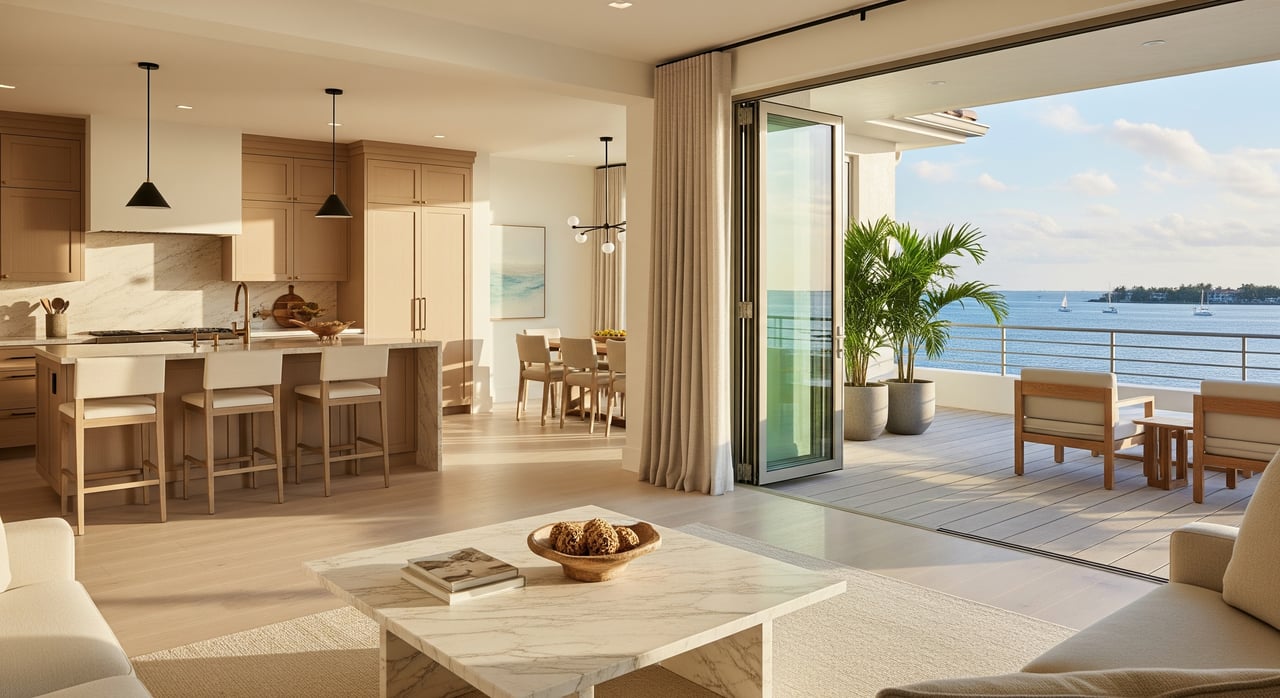
The quality of your sight line matters as much as the direction. Unobstructed ocean views typically command the top PPSF. Partial views or anticipated obstructions from nearby development reduce value. Always check recent permits and zoning to understand future changes.
Closed sales are your best evidence. In a thin luxury segment, extend the look-back window as needed, but weight the most recent, same-building results highest. Ask prices are not proof. Focus on recorded sale prices, dates, and terms.
Turnkey, high-end finishes often draw a meaningful premium in Palm Beach. Verify what was renovated, the craftsmanship, and whether terraces or enclosed balconies are counted in the reported area. Normalize to the same square-footage basis across all comps.
Recurring fees and special assessments change what buyers will pay. Review the budget, reserve study, minutes, and recent assessment notices. Florida Statutes Chapter 718 governs condominium reserves and disclosures, so use those documents to understand real financial health.
Full-service, well-run buildings often command higher PPSF. Consider concierge, private beach access, valet or deeded parking, storage, and rental rules. Better operations, clear policies, and tasteful amenity programs support stronger pricing.
List address, building name, unit number, floor, stack, interior living area, terrace square feet, bed and bath count, parking and storage, exposure, view type, finish level, HOA fees, and any assessments. Confirm every data point with the property appraiser, association records, and plans.
Use a strict hierarchy:
Confirm the measurement basis. Some sales include enclosed balconies or terraces. Normalize to interior living area for apples-to-apples PPSF. Document your approach.
Start with intra-building differences. If same-building trades show a known premium for a corner east line or for higher floors, quantify that delta. Apply adjustments only where you have evidence and note uncertainty where data are thin.
Group condition into clear buckets: original, cosmetic-modernized, or high-end turnkey. Verify scope through photos, descriptions, and invoices when available. Tie your finish adjustment to observed premiums in similar sales.
Capitalize the present value of known special assessments and consider recurring HOA differences. A large multi-year assessment often results in immediate price concessions in closed trades.
Produce a likely PPSF and a realistic range. Weight same-stack closed sales the most, then same building, then submarket. Note market momentum and seasonality when deciding between conservative, market, or aggressive pricing.
Be clear about what is supported by intra-building evidence versus external assumptions. If you used a longer look-back or a small sample, flag that and temper your range.
Elevation is not just the floor number. The building’s base height and finished-floor elevation influence flood exposure and insurance pricing under FEMA Risk Rating 2.0. Two similar low-floor units can have very different carrying costs due to elevation. Include flood zone, elevation data, and any building mitigation features in your pricing narrative.
Palm Beach buyers respond to tasteful, turnkey design. High-end kitchens and baths, smart systems, and cohesive staging can justify notable PPSF premiums, especially in oceanfront product. The key is proof. Anchor your premium to closed examples with similar finish quality and confirm whether terraces or enclosed spaces were included in the reported square footage.
Strong reserves and transparent governance support price. Review the association budget, reserve study, and recent meeting minutes. Large upcoming capital projects suppress value unless the market has already priced them in. Buyers will capitalize future obligations into today’s price, so you should too.
Active listings show hopes, not outcomes. In luxury, the gap between list and close can be wide. Base your PPSF on recorded sales.
A clean comp without a pending special assessment is not comparable to your building if you have a large assessment ahead. Adjust for it or your price will mislead.
Builder area, gross, and interior living area are not the same. Standardize, then compare.
A single trophy trade can distort the story. Use a longer look-back and triangulate with similar buildings when sales are sparse.
Check nearby permits and zoning. If a mid-rise on a vacant lot could trim your view corridor, price in the risk.
Rental caps, waiting periods, or high investor occupancy can affect demand. Confirm policies and adjust expectations accordingly.
If same-stack trades are scarce, move out one ring at a time. First, same building with the closest exposure and floor band. Next, the same block with comparable building age and services. Finally, step into the immediate Palm Beach submarket, matching orientation and service profile to keep the comparison clean.
Pricing is only half the equation. In Palm Beach, design-forward presentation helps defend your number. Staging that elevates sight lines, lighting that flatters morning or afternoon exposure, and an editorial narrative that explains line, elevation, and view corridor can convert qualified interest into a premium outcome. Pair your data-driven PPSF with curated, turnkey merchandising to reinforce value.
Ready to price with confidence and present with taste? Schedule a private consultation with Sharon Sweet to apply this framework to your specific line, elevation, and view, and to craft a design-led strategy that supports your target PPSF.
Stay up to date on the latest real estate trends.
With unmatched creativity, negotiation skills, and dedication, Sharon is ready to guide you through every step of your real estate journey.
Sharon Sweet
Address 340 Royal Poinciana Way Ste M314 Palm Beach FL 33480