How Palm Beach Condo Architecture Shapes Daily Living
March 12, 2026
March 12, 2026
When you tour condos in Palm Beach, do some spaces feel like serene courtyards while others open to sky-to-water views? That contrast is not an accident. It comes from a century of design thinking that shaped how buildings handle sun, breezes, and everyday living. In this guide, you’ll learn how to read the most common architectural styles, what they mean for light and layout, and how to match a building’s design to the lifestyle you want. Let’s dive in.
Palm Beach’s visual DNA traces strongly to Addison Mizner’s early twentieth-century interpretation of Mediterranean and Spanish Colonial architecture. Stucco, clay-tile roof accents, arches, courtyards, and wrought iron defined an enduring “Palm Beach” vocabulary that residents still appreciate for its romance and shade. You can see these elements documented in the Town of Palm Beach Landmarks Manual and related preservation materials. For a deeper historical view, explore the Town’s Landmarks Manual and Addison Mizner resources through the Preservation Foundation’s collection, which outline the stylistic roots and local context.
Postwar growth brought a second wave. Mid-century modern ideas introduced clean lines, open plans, and bigger glass openings. Late twentieth and twenty-first century development added glass-forward waterfront towers with panoramic views and resort-level amenities. These later buildings are most visible along West Palm Beach’s Flagler Drive and in selected Boca Raton and Delray Beach corridors, where height, glass, and terraces define the skyline. For style definitions and local history, the Town’s Landmarks Manual remains a reliable reference.
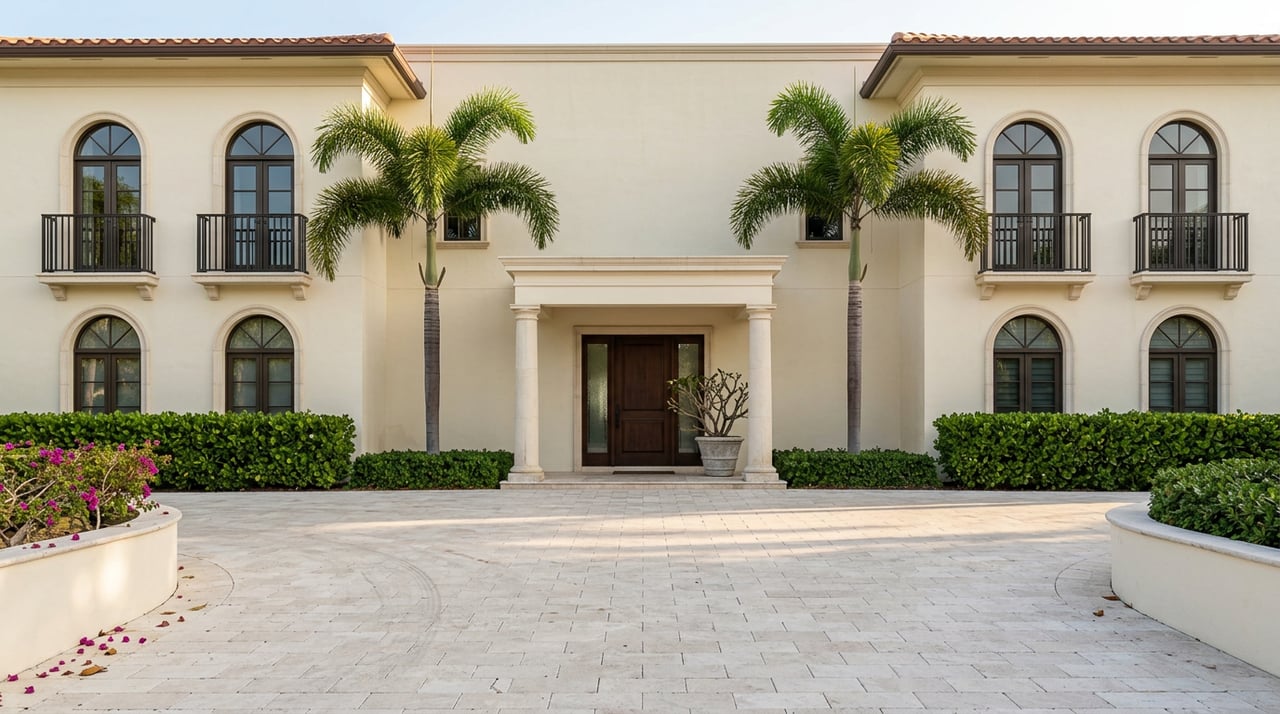
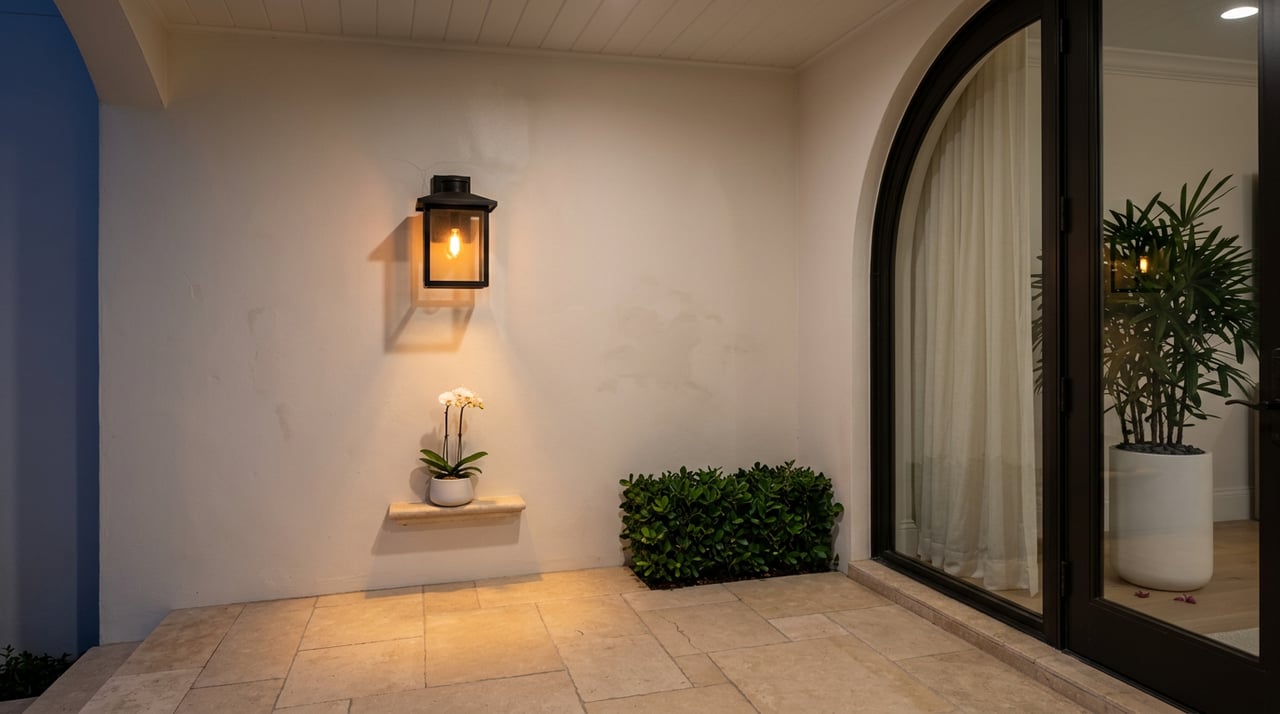
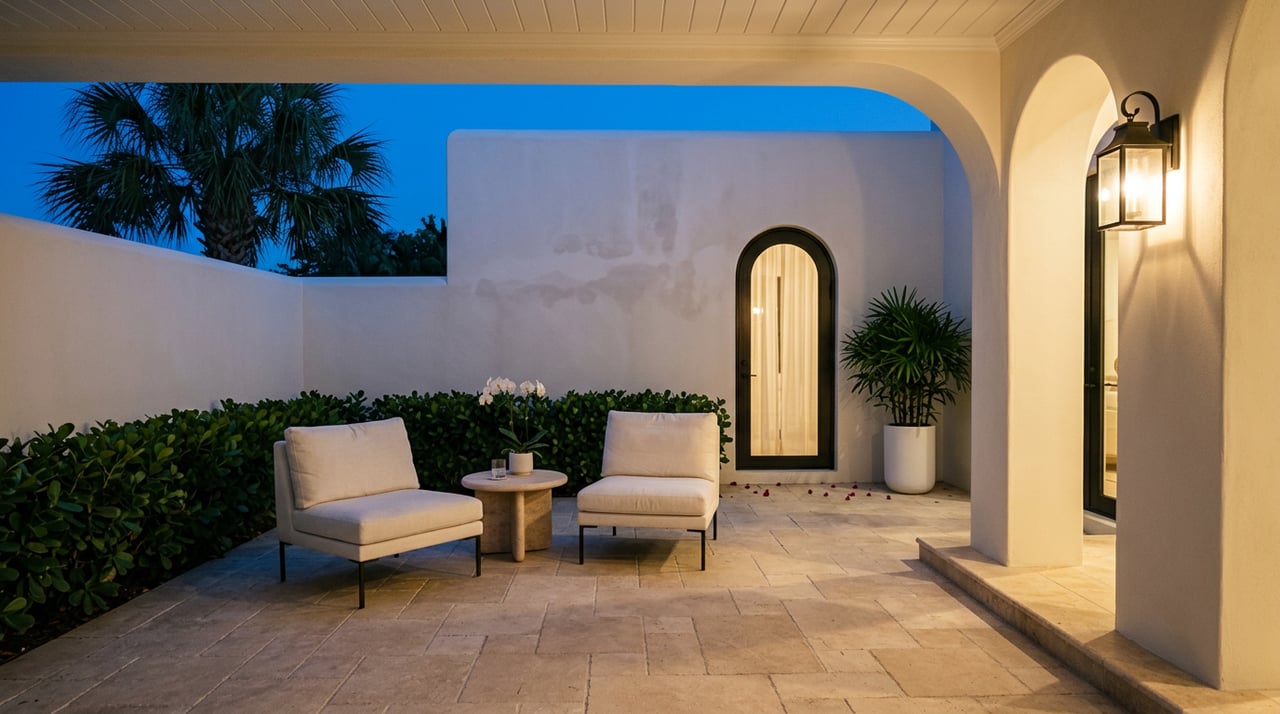
Look for textured stucco, clay barrel tiles, arched openings, carved stone or cast details, and romantic ironwork. Entries often pass through arcades or loggias into a landscaped courtyard, and façades read as low-rise, village-like compositions rather than tall slabs. Boutique condo conversions and smaller apartment buildings on the island often use these cues, which the Town of Palm Beach recognizes as part of its core architectural character. You can review these features in the Town’s Landmarks Manual for specific definitions and examples.
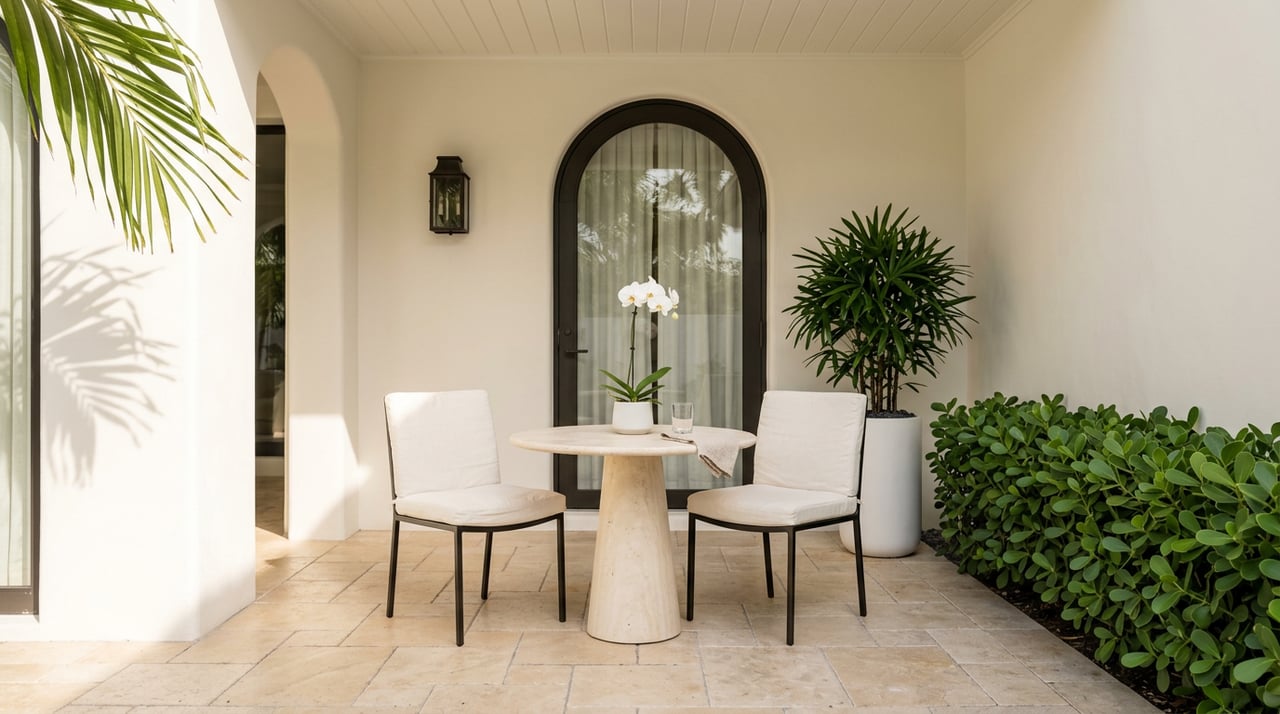
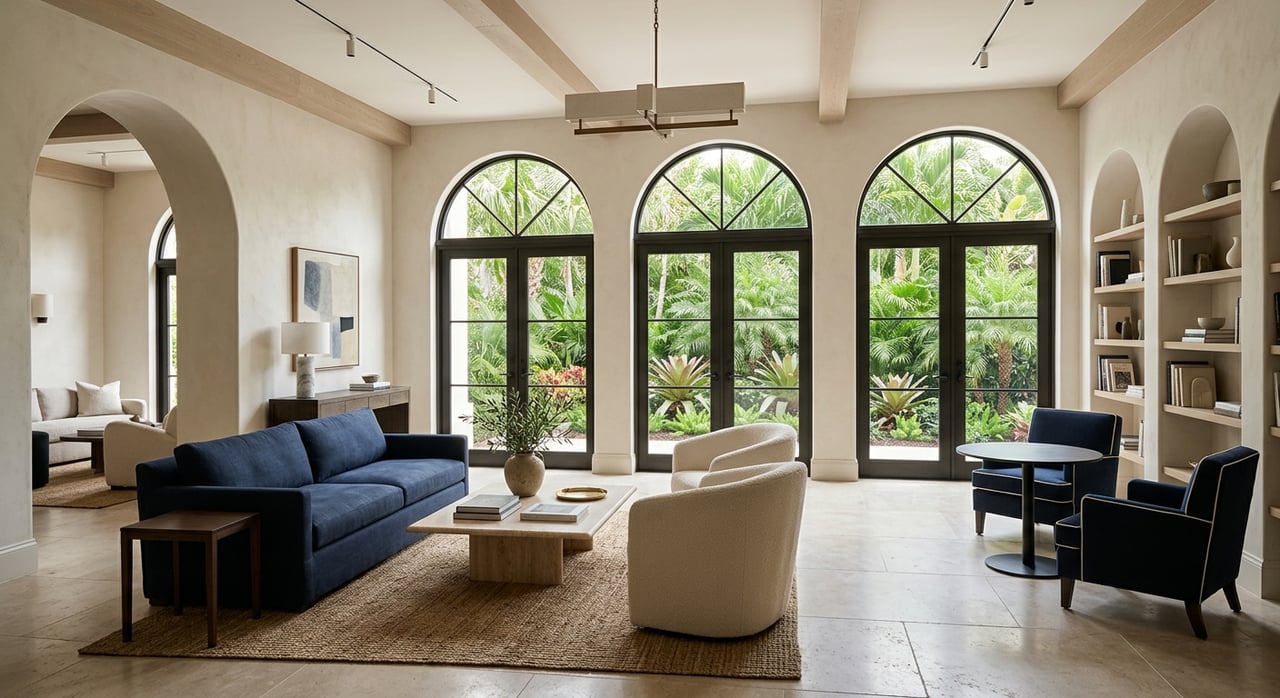
Mediterranean buildings favor shaded, controlled daylight. Covered walkways, loggias, and smaller punched windows soften glare and heat. Interiors often organize around an inward-facing courtyard, creating private outdoor rooms that feel cool and intimate. Expect calmer, diffuse light indoors and a rhythm of rooms oriented to shade and greenery.
If you love al fresco dining in sheltered spaces, morning coffee under a shaded arch, and a quieter, inward feel, this style may be ideal. It supports privacy, calm, and year-round outdoor living in comfort. The experience is less about a single wide-open view and more about curated, layered spaces.
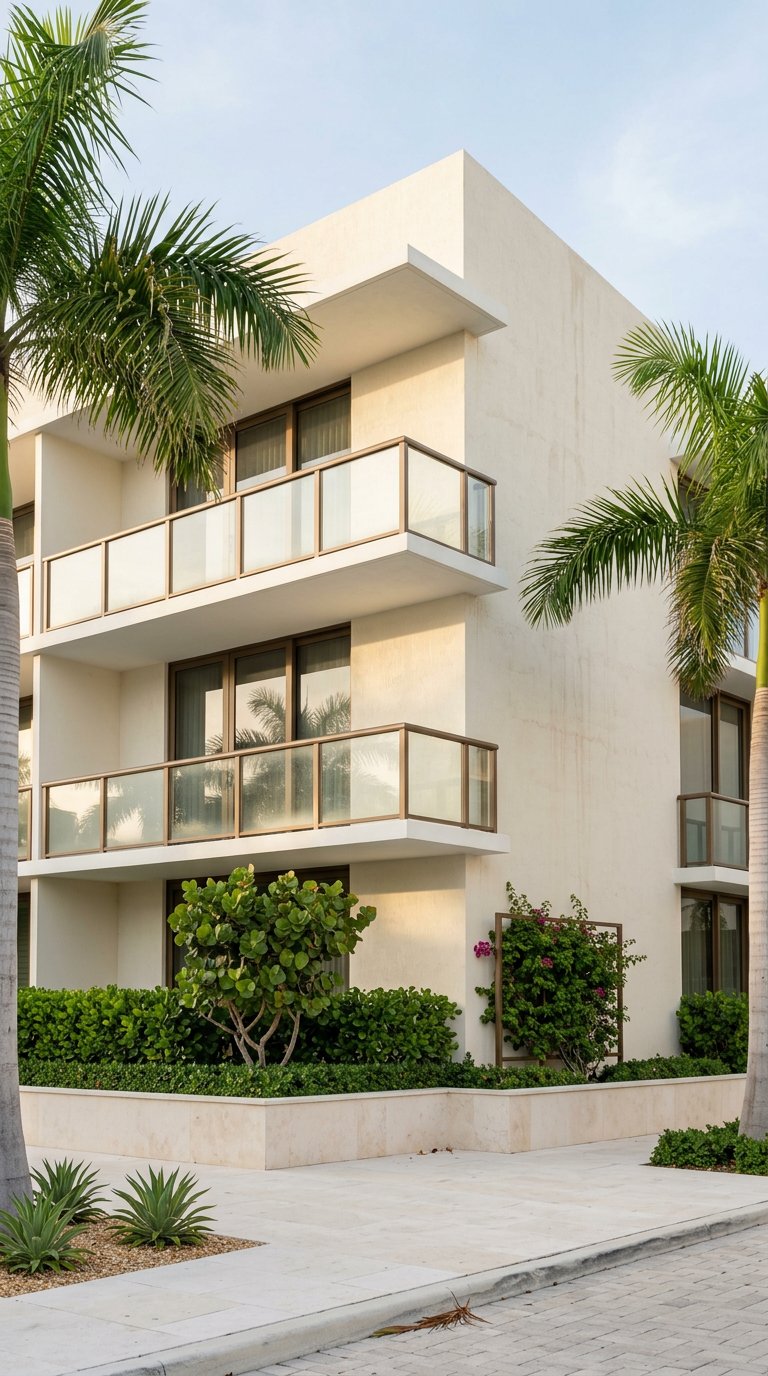
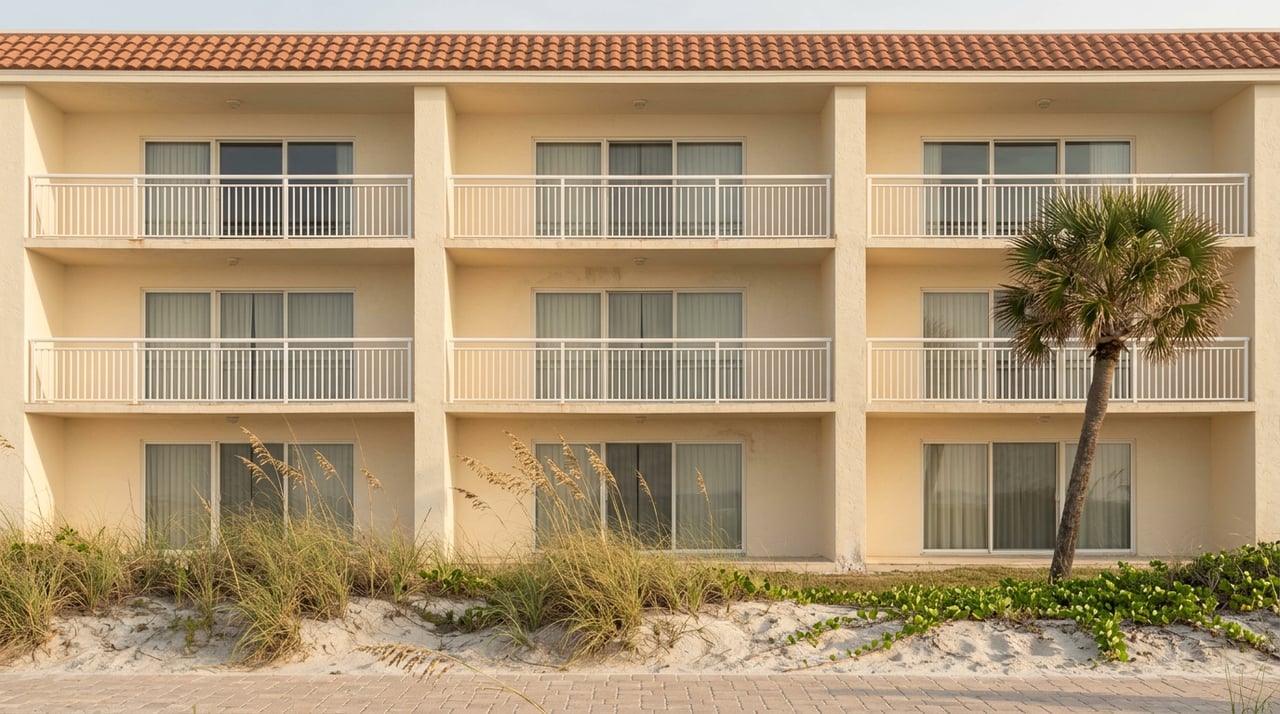
Mid-century and postwar buildings favor clean horizontals, flat parapets or low-slope roofs, simple forms, and restrained ornament. You’ll see longer balconies with repeating rhythms, sliding glass doors, and ribbon or planar window walls. Across the county, smaller mid-century apartment buildings and 1950s–1970s towers still stand, reflecting this simpler, more open vocabulary.
These homes often deliver more direct light in main living areas. Open kitchen, living, and dining zones create easy circulation and social connection. Sliding doors and deeper terraces connect you outdoors while framing linear sightlines to water or streets. The mood is casual and airy rather than formal.
If you value flexible entertaining spaces, indoor-outdoor flow, and a clean, uncluttered look, mid-century or postwar towers can be a great match. You still get sun and views, but with an approachable scale and a relaxed plan.
Today’s luxury towers on corridors like West Palm Beach’s Flagler Drive emphasize floor-to-ceiling glazing, vertical lines, and sculpted amenity podiums. Private terraces run large, and uninterrupted sightlines are a signature. Newer projects pair large glass areas with engineered shading, reflecting modern energy and storm standards.
Expect maximum daylight and broad water or city vistas. Open plans pull living and dining to the glass, while bedrooms often tuck to sides or inward walls. Ceilings are usually tall, and terraces act as true outdoor rooms. The tradeoff is more solar gain and a need for thoughtful shading or window treatments to keep interiors comfortable.
If you want dramatic views, hotel-like amenities, and a crisp, modern canvas, contemporary towers deliver. The vibe is resort-forward and social, with private outdoor space sized for lounging or dining and common areas designed for gatherings.
Beyond headline styles, the region’s practical, climate-aware language shows up in many buildings. Look for deep roof eaves, covered verandas and lanais, screened porches, and shutters or storm systems. Materials often include stucco and coral-stone accents. These features support shaded, breezy living and protect against intense sun and coastal weather, which the Town’s historic inventories and style overviews note as part of local adaptation.
In condos, you’ll often see these elements at podium levels, townhouse components, or smaller stacked buildings with screened outdoor rooms. They prioritize functional shade, cross-ventilation where feasible, and all-season comfort.
While Mediterranean Revival dominates the Palm Beach image, you can find Art Deco and Streamline Moderne details in several Palm Beach County pockets, plus Moorish Revival touches within eclectic compositions. Curved corners, horizontal banding, stylized motifs, and smooth stucco surfaces add vintage flair. Delray Beach’s historic inventories include examples that highlight these period accents within the broader coastal fabric.
How a building handles daylight often shapes how you live in it. Glass-forward towers maximize brightness and views by placing living areas along the glazing, but that can increase glare and heat. Designers respond with high-performance glass and strategic shading to balance comfort and energy. Research on daylighting points to health and energy benefits when daylight is properly controlled, which explains why shading and coatings are so common in modern waterfront towers. For foundational daylighting research, see summaries from the Lighting Research Center and peer-reviewed studies published by MDPI.
More traditional Mediterranean buildings create softer light with covered outdoor rooms and smaller openings. The result is a calm, filtered interior that stays cooler and more private during peak sun. Mid-century designs often sit in the middle: open plans, strong indoor-outdoor links, and terraces sized for daily use, all without the full glass curtain wall expression.
Florida’s energy and hurricane requirements shape what you see and feel. The Florida Building Code sets performance standards for glazing, including solar heat gain coefficients. This is why modern towers often combine large glass areas with coatings and engineered shading. In coastal and high-wind zones, impact-rated systems with documented approvals are common, and many buyers ask to see labels or Notice of Acceptance details. You can learn more about energy standards through Florida’s Building Code resources and review impact testing and acceptance protocols through Miami-Dade’s NOA library.
Phrases to help explain your taste: “I prefer an inward, courtyard-centered layout with shaded loggias,” or “I want an open plan with floor-to-ceiling glazing and a deep terrace for sunsets.” Clear language makes it easier to find the right fit.
The right condo style is the one that makes your daily life feel effortless. If you love soft, shaded rooms and private courtyards, Mediterranean buildings may resonate. If you crave open plans and an easy flow to the terrace, mid-century and postwar designs might suit you. If you want big water views and curated amenities, a contemporary tower could be perfect.
You deserve guidance that blends design literacy with building-level insight. For staging, finish strategy, and amenity vision that turns a residence into a turnkey lifestyle object, connect with Sharon’s boutique advisory. Schedule a private consultation with Sharon Sweet to discuss your goals and see a shortlist of buildings that match your taste, comfort, and long-term value.
Stay up to date on the latest real estate trends.
With unmatched creativity, negotiation skills, and dedication, Sharon is ready to guide you through every step of your real estate journey.
Sharon Sweet
Address 340 Royal Poinciana Way Ste M314 Palm Beach FL 33480